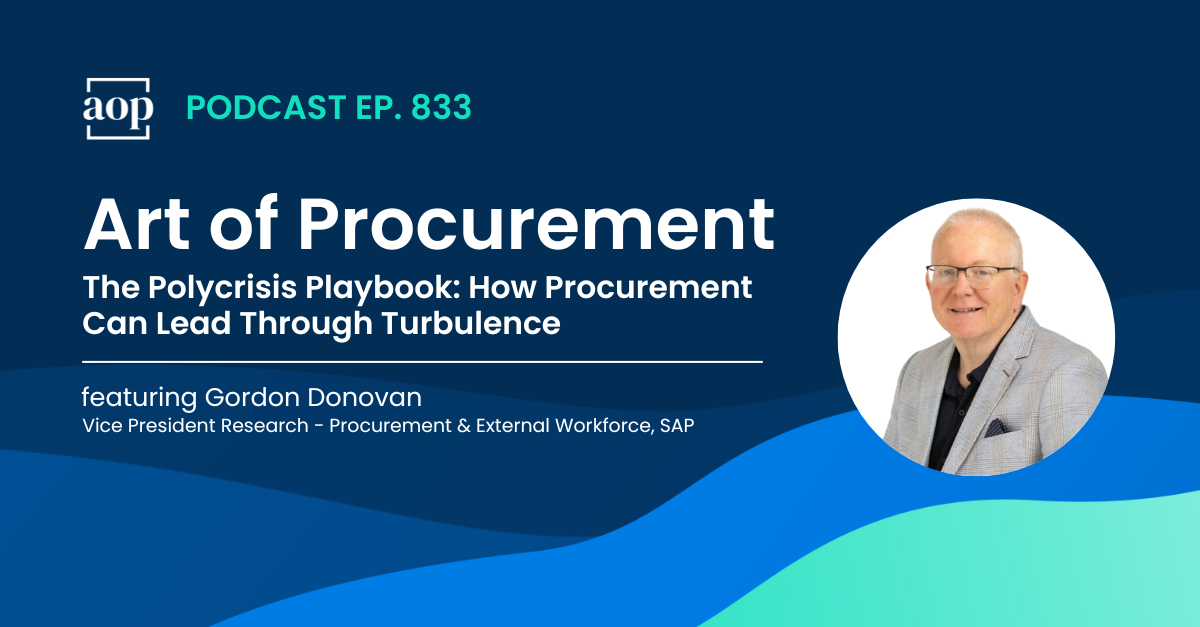
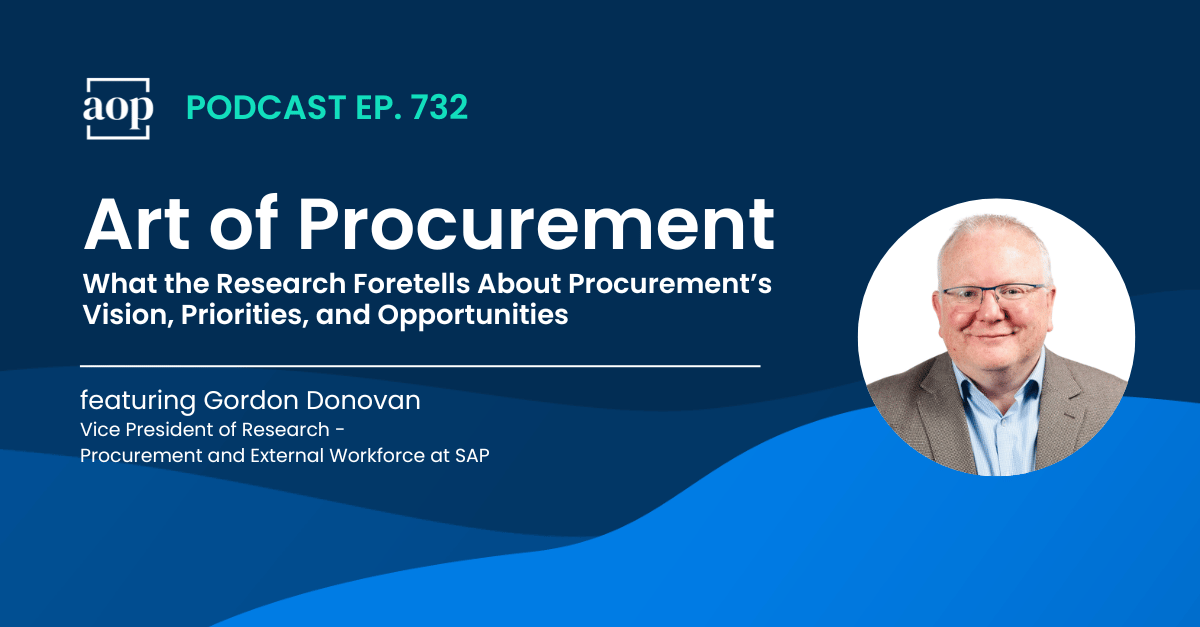
“We’re in the business of change: selling change and then delivering it”
- Gordon Donovan Vice President Research - Procurement & External Workforce, SAP
Procurement is facing more turbulence than ever before. Whether it’s geopolitical shifts, new technology, or supply chain upheaval, leaders are feeling the pressure to adapt.
The latest SAP Economist Impact research, “The Resilient Edge: Procurement in an Era of Polycrisis,” explores how procurement teams can not just respond, but plan several moves ahead, especially as outsourcing and external workforce strategies evolve in the next three to five years.
To parse through the insights in this new research, I recently spoke with Gordon Donovan, Vice President Research - Procurement & External Workforce at SAP, who has spent years steering this research. He brings a first-hand look at shifting priorities, confidence in category management, and how procurement can seize strategic opportunities.
Here are a few stand-out moments from our conversation.
Cost Savings Remains, But the Value Proposition Is Evolving
“In a shocking development, 43 percent said that cost savings and cost optimization was the primary value proposition of procurement… The second one globally was digitalization, and then we’ve got sustainability and category strategies.”
SAP’s new research shows cost savings is still the dominant perception, but it’s not the whole story anymore. For years, the procurement community has talked about the expanded value they can bring – risk mitigation, innovation, sustainability – but this data shows the narrative hasn’t yet shifted at the executive level. If we want procurement to be seen as a source of strategic advantage, not just efficiency, we have to start measuring and communicating impact differently.
Confidence in Category Management Is High, But Risk Strategies Lag Behind
“In terms of category management as an end-to-end process, 45 percent said they were highly confident, and 51 percent said they were somewhat confident… But when we asked about confidence in category-specific risk strategies, only 20 percent said they were highly confident.”
These are interesting data points because they reveal that the delta between category management process confidence and risk strategy confidence is too large to ignore. Risk is becoming the dominant lens through which the business evaluates its partners and decisions. If procurement’s strategies are still largely geared toward cost leverage and consolidation, they are going to miss what the business really needs from them. Procurement needs to lead with a risk-first mindset and build the category muscle to support it.
SOWs Are the New Strategic Muscle
“If you're going to increase outsourcing, you're going to have a big contract and a big SOW. So you better make sure the SOW is better than it is at the moment."
Procurement can no longer treat SOWs as administrative formalities. As organizations lean more heavily on outsourced services and contingent talent, the quality of those contracts becomes a key enabler – or blocker – of value. This means procurement teams must invest in commercial acumen and statement-of-work expertise, not just to reduce risk, but to align external workforce engagements with broader strategic goals. It's a critical pivot from policing spend to proactively shaping outcomes.
Five-Year Priorities Are Coming Into Focus—But Skill Gaps Could Undermine Progress
“This year, for the first time, the top organizational risk priorities were mirrored in the top strategic priorities both in the short term and the long term… But curiosity, commercial awareness, problem-solving, and change management were the lowest skills being prioritized.”
It’s encouraging to see alignment at the top, but the disconnect in talent planning is concerning. If procurement is going to take on reconfigured supply bases, AI integration, and category strategy transformation, they need teams who are adaptive, commercially fluent, and confident in navigating ambiguity. Procurement leaders can’t afford to treat those as soft skills – they’re essential capabilities now.
Cybersecurity Is the Undervalued Risk
“Over 60 percent of respondents said cybersecurity had the most critical impact on strategy, yet cybersecurity risks are low in the priorities procurement is asked to focus on.”
This is one of those moments where the gap between awareness and action is dangerous. Procurement’s visibility into the supply chain gives them a critical role in managing cybersecurity, especially as attacks increasingly come through tier-two and tier-three service providers. All procurement teams should be asking themselves: Are our category strategies addressing cyber risk? If not, they may be overlooking one of the most material threats to the business.