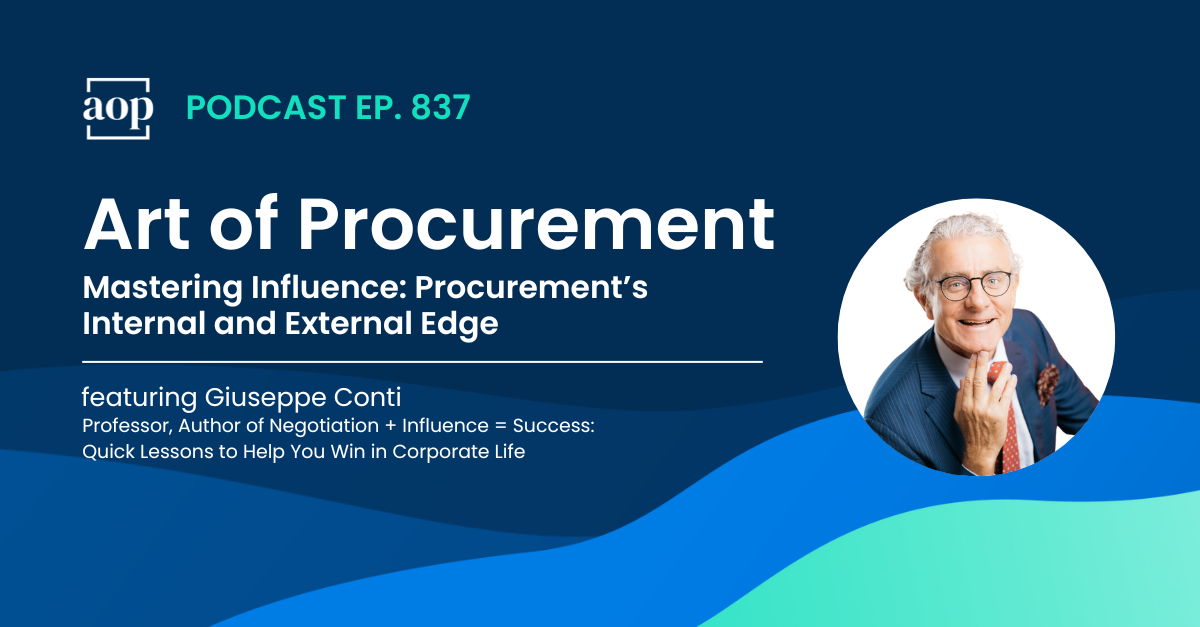
“Too many procurement professionals have developed a push energy. If you take that same approach with internal stakeholders, it won’t work. We need to develop pull energy — asking questions, listening, and creating a shared vision."
- Giuseppe Conti, Professor, Author of Negotiation + Influence = Success: Quick Lessons to Help You Win in Corporate Life
Procurement professionals are often trained to drive change through facts, data, and compliance, and that approach has worked well for supplier negotiations. But what happens when those same tactics fall flat internally?
In this conversation with Giuseppe Conti, negotiation expert, business school professor, and former procurement executive, we explore the real battleground of influence: the inside of your own organization.
From why internal negotiation is often harder than external, to how “pull energy” unlocks real partnership, Giuseppe offers a series of practical insights that I found both refreshing and deeply applicable.
Below are some of the moments that stood out to me and the lessons procurement leaders like us can take away.
Why Internal Negotiation Is Harder Than External
“The consistent feedback that I get, especially in large organizations, is that the internal piece is more difficult than the external one. And too often, we don’t challenge our internal stakeholders.”
This struck a chord. Many of us are more confident negotiating with a supplier than we are pushing back on an internal stakeholder with unrealistic timelines or scope. That’s often because internal relationships come with politics, history, and less structure. What Giuseppe is advocating here is not about being difficult; it’s about being firm.
Internal influence requires procurement to set expectations clearly and early, especially when timelines or demands will undermine the quality of outcomes. This is a core leadership skill, not just a negotiation tactic.
Push vs. Pull Energy
“Guess what? If you're going to go with the same approach with the internal stakeholder, it's not going to work. So it's more like being able to develop the pull energy, which is more about asking questions, listening, developing a vision, and identifying common values. And this is an area where too often procurement people feel uncomfortable.”
This was one of my favorite parts of the conversation. Procurement is taught to advocate, argue, and make each business case. Giuseppe reminds us that true influence, especially inside an organization, is about inviting people in, not cornering them. Pull energy means building shared goals, uncovering needs through questions, and leading through trust rather than pressure. For many teams, this is the critical shift needed to move from compliance enforcer to strategic advisor.
The Listening Gap
“Procurement people put listening as their second strongest skill… but salespeople listed ‘they don’t listen’ as the number two problem with procurement. So there’s a gap between how good we think we are, and how others experience us.”
This one stung a little. We all think we’re good listeners, especially when we’re absorbing technical or financial information. But listening requires more than hearing; we have to signal that we heard, ask follow-ups, and reflect the stakeholder’s priorities.
Giuseppe’s point here is critical: if we don’t recognize the gap, we won’t close it. And without trust and understanding, no data-driven argument will land.
The Facts Aren’t Enough
“The good influencer should be able to play on both fields – system one and system two. Yes, we should have the facts and the data, but we should also influence the emotional side.”
Giuseppe referenced Kahneman’s theory here, and it really hits home. We all rely on data to make the case, but stakeholders make decisions emotionally first, and justify them later with logic. That means we need to invest in how we communicate, not just what we communicate. Tone, timing, visual cues, and relationship equity all matter. Emotional intelligence isn't a bonus; it’s the bridge between insight and action.
Training is Only the First Step
“Learning is not one event, but a journey.”
This is a powerful reminder for procurement leaders who invest in training. One-off training sessions don’t build capability like practice does. Whether through internal coaching, peer feedback, or structured follow-up, we have to embed these skills into the way teams work day to day. Otherwise, the ROI of even the best negotiation training will fall short.
Giuseppe’s practical frameworks that he shared in the episode (like a 20-minute one-page prep sheet or his listening techniques) are simple but powerful. But even more importantly, he reminds us that great procurement outcomes don’t come from leverage or logic alone. They come from the ability to understand, connect, and influence, especially with the people inside our own four walls.
If you’re working to elevate your influence or coach a team that’s stronger with data than persuasion, Giuseppe’s playbook is a great place to start.