
2 min read
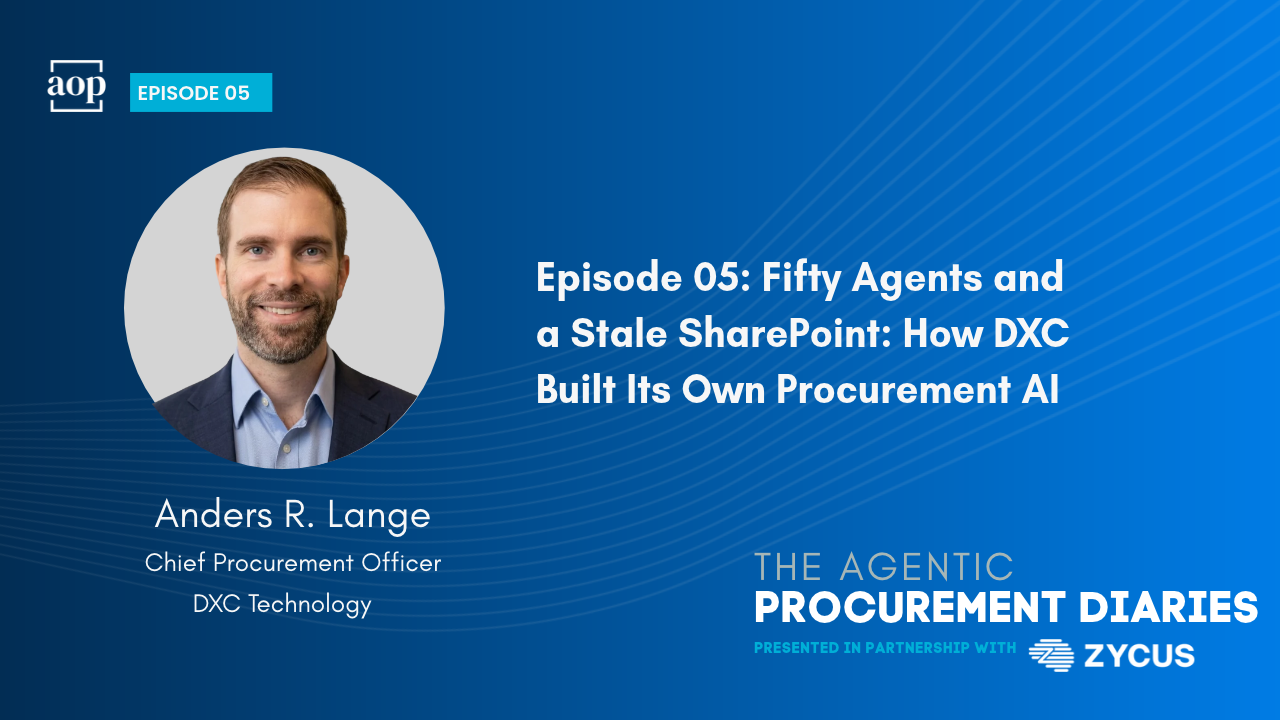
The Agentic Procurement Diaries: Fifty Agents and a Stale SharePoint: How DXC Built Its Own Procurement AI
Philip Ideson : November 11, 2026
Dear Diary…
I did a review with my team the other day as to where we are, and we have more than 50 active agents now.
Anders R. Lange is the Chief Procurement Officer at DXC Technology, a firm that helps large organizations manage, modernize, and secure their IT systems. He trained in commercial law and business administration in Denmark. An internship led him to Carlsberg, and he has stayed in procurement ever since. He had been at DXC for 18 months when we spoke.
The Inheritance
Anders took over a function DXC calls supply chain management, reporting to the CFO. The remit runs well past sourcing: accounts payable, discount tracking, M&A and divestiture support, travel and expense, logistics, and, more recently, real estate and facilities. Risk sits with legal.
The documentation was decent. The problem was where it lived. It was spread across SharePoint sites, web pages, and folders that people could search if they had the time and knew where to look. So Anders and his team fielded a constant stream of questions about PO status, policy, and who to engage.
The Bet
The big decision was to build agents in-house. Part of the reasoning was cost. Part was DXC's customer zero idea: could they build something their clients would actually want to use?
The rest came from experience. External pilots ran into data privacy questions about where a contract would be stored and how the supplier would use it. Having data ring-fenced inside DXC's firewall removed most of that friction. Anders credits a strong digital procurement and systems team, and he is candid that not every function has one.
The result he is proudest of is the Supply Chain Advisor. It started as a way to answer common questions. It now handles intake and orchestration, from "I have a need" through to payment. Anders knows what a standalone orchestration tool costs, and that was part of the appeal.
The Agentic Question
I asked Anders where he would let an agent run with no human in the loop. He gave two examples. The first is spend categorization, for categories the data shows are easy to classify. The second is the rule-based process for applying payments to invoices to capture discounts.
His test is containment. If something goes wrong, procurement receives the error, and no internal or external stakeholder sees it. The team checks the percentage the agent is validating or processing.
Everywhere else, DXC holds to what it calls "human plus." Anders described an agent proposing 90-day payment terms when DXC's contracts say 120 days, because nobody had given it that context.
The Receipt
What worked: more than 50 active agents. They include a tail spend negotiation agent for work the team never had time to touch, and a contract analytics agent that flags risks against standard terms. Anders estimates the Supply Chain Advisor saves to the tune of $500 per month in questions the team no longer answers by hand.
What did not work at first: testing more than 500 questions exposed stale content and links to folders that had moved. The data lake is still a work in progress, and every agent release depends on its next step.
Internal competitions produced duplicate agents, plus some with low throughput or narrow use. That pushed DXC to create a central agent library. Before anyone builds, they check for an existing agent and talk to its owner.
My takeaway is his advice on contracts. Anders would not sign a five-year AI deal given how often models change, and I agree with him that optionality carries real value right now.
Links:
- Anders R. Lange on LinkedIn
- Zycus on LinkedIn
- AOP Provider Directory | Zycus
- Subscribe to the AOP Newsletter