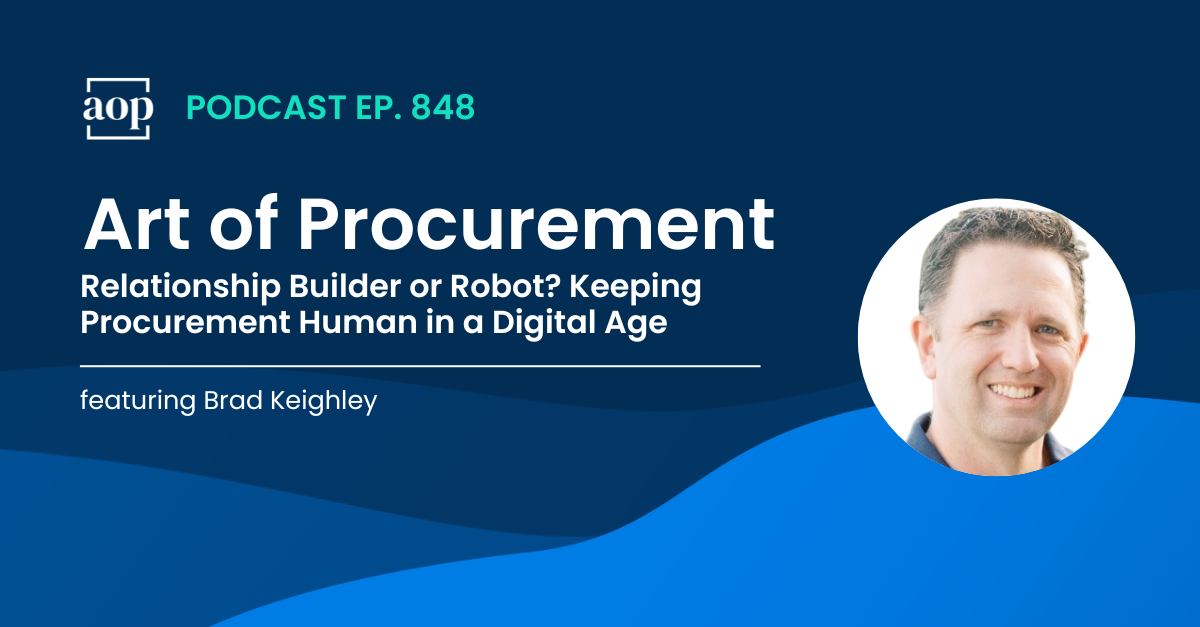
“AI has fantastic value when you look at spend analytics, sourcing decisions, and process efficiency, but to replace the infancy stage that allows you to have a relationship with stakeholders, I think, is a mistake"“- Brad Keighley
Procurement is changing fast. Everywhere we look, leaders are experimenting with automation, AI, and digitization to scale their operations and deliver more value. But with that speed comes a challenge: how do we make sure we don’t lose the human connection that’s always been the foundation of effective procurement?
That’s exactly what I explored in my recent conversation with Brad Keighley, a multiple-time CPO who’s led procurement functions at companies like Dell, Meta, and several pre-IPO tech firms. Brad has seen procurement from every angle, including consulting, outsourcing, and in-house leadership, and he’s deeply thoughtful about how we can build digital models that still feel personal.
Here are some of the moments from our conversation that stood out most to me, along with my reflections on what they mean for procurement leaders today.
Staying Grounded in Every Layer of Procurement
“When folks pivot to the strategic side of procurement, and they let go of the other foundational pieces, you don’t really bring the full breadth. That’s really something I attribute a lot of my career growth to, being able to see all aspects of procurement. It allows me to see procurement from all angles.”
This struck me immediately because it’s something I’ve seen play out time and again. Too often, as leaders move up, they lose touch with the operational details that drive day-to-day credibility. Brad’s perspective is a reminder that staying connected to the work, no matter how tactical, builds the trust that enables influence at the strategic level.
Learning Through Challenge, Not Comfort
“If you really want to build your career, go to the clients that we’ve had for a year or two, the ones where maybe the CFO isn’t taking our call right now, and turn those around. Understand their problems, understand what was broken, and fix those accounts.”
Brad shared this advice from his early consulting days, and it resonated deeply. Growth rarely happens in perfect environments. The ability to listen, diagnose, and rebuild broken relationships isn’t just a client service skill, it’s one of the most valuable leadership traits in procurement. When we take on the hard situations instead of avoiding them, we learn what truly drives stakeholder trust.
The Real Role of Procurement
“There are so many executives that still view procurement as a support function that’s just supposed to drive down cost. If you’re in that type of environment, my suggestion would be to run.”
This is classic Brad: direct and absolutely right. Procurement can’t thrive where it’s viewed as a cost-cutting service. His comment is a reminder that we have a choice. We can stay in environments that see procurement narrowly, or we can help lead in organizations that recognize their full strategic impact.
Protecting the Company Comes First
“If we have a breach of our data, you’re not going to really care that I got the optimal cost with that vendor. We’re going to be concerned if we have the right data protection contracts in place.”
This is one of my favorite takeaways from our discussion. Brad reframes procurement’s value proposition beyond savings, highlighting risk management as an essential part of protecting the enterprise. As technology continues to reshape supply chains, the procurement leaders who focus on security, compliance, and resilience will be the ones who earn lasting executive trust.
Why Human Touch Still Wins
“It’s a combination of the technology being able to yield that value, and then the service – the person going in and really selling that value and showcasing what procurement can bring – that keeps opening the door. I think if all you do is service and you don’t have that technology foundation, you’re shooting yourself in the foot. And vice versa. So many companies think, ‘Oh, we can keep this slim and have amazing technology that’s just going to automate itself.’ You’re doing yourself a huge disservice as well.”
This is, to me, the heart of the conversation. Brad believes, rightly, that technology can amplify what we do but should never replace the relational foundation of procurement. The intake conversation, the early engagement, the empathy, that’s where partnerships are built. Over-automating those moments risks turning procurement into a transaction rather than a trusted advisor.
Making Procurement Easy for Stakeholders
“Procurement is a white-glove service. We make it easy. Stakeholders come to us because they see how simple we’ve made it for them, versus never thinking in the past that they would use procurement.”
Brad’s “white-glove” model is a smart response to one of procurement’s biggest barriers: friction. If it’s hard to engage with us, people won’t. His approach proves that great service design, clear communication, quick turnarounds, and thoughtful support can turn skeptics into advocates. Technology can streamline, but simplicity and responsiveness build loyalty.
Listening, Learning, and Leading
“Protecting the company, measuring cycle time, managing quality, delivering savings, and listening to the voice of the customer, that’s probably a good dashboard to begin with on procurement measurements.”
Brad’s closing point is simple but profound. It’s not enough to focus on numbers alone. The real measure of procurement’s success is when they protect the company, create value, and earn trust across the business. That’s what keeping procurement human is really about.