There is no template for transformation. You have to build transformation for the organization that you're in, go and learn as much as you can about the organization, and then pivot where you need to.”
It’s one thing to talk about procurement transformation. It’s quite another to build a function from the ground up during a global crisis.
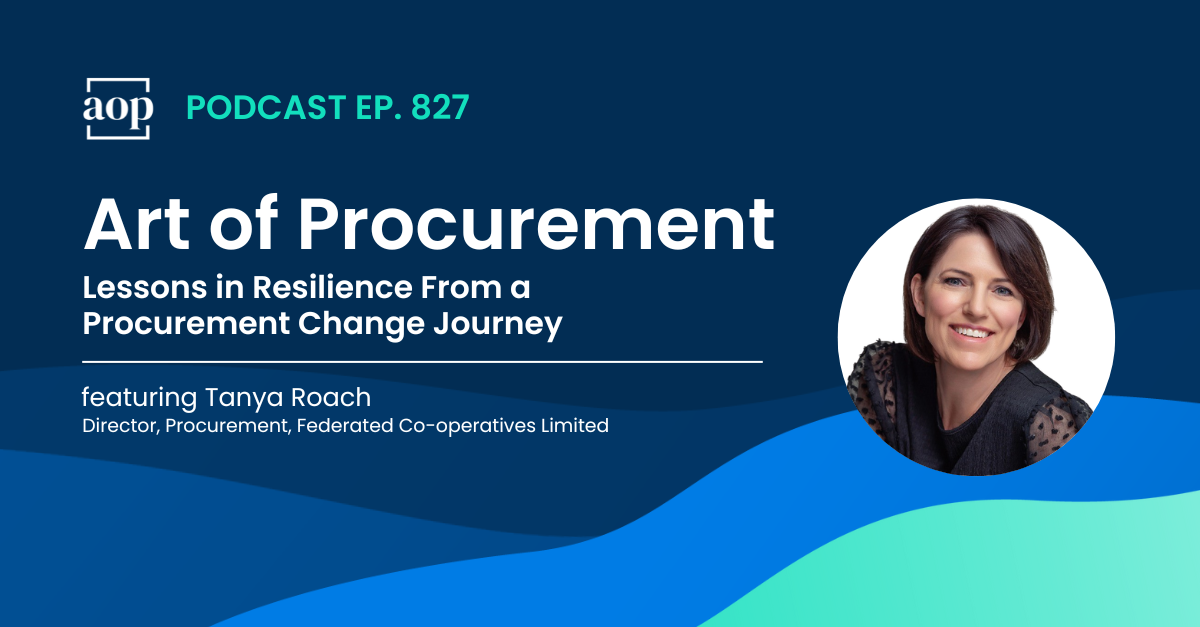
As procurement leaders face accelerating shifts (from digital transformation to workforce expectations), Tanya Roach’s experience as Director of Procurement at Federated Co-operatives Limited offers a compelling roadmap for how resilient people enable lasting change… even in the most challenging circumstances.
Tanya joined me to record this Art of Procurement podcast episode at the 2025 Supply Chain Canada National Conference. During our conversation, she shared the inside story of how her team navigated a transformation program through the turbulent early days of COVID-19, what mattered most about their approach, and why talent was always at the center.
Here, in Tanya’s own words, are some stand-out moments from our conversation:
Curiosity is a Core Leadership Skill
“What I always have done myself and what I try to lead my people to do is be very curious, and ask really good questions. I think asking questions earlier versus later is always a good idea.”
For Tanya, curiosity isn’t just a helpful trait, it’s a leadership principle. By fostering a team culture where questions are encouraged early and often, her team built trust, uncovered risks sooner, and remained flexible as priorities shifted. In transformation, curiosity drives understanding, which in turn drives smarter, more responsive decision-making.
Picking Curiosity and Resilience Over Job Titles
“We were looking for curious people, entrepreneurial-type, spirited people. We are a very action-oriented team. So we wanted people who actually wanted to move the needle.”
Early team members weren’t specialists, but generalists ready to tackle what came up. This practical flexibility helped them respond quickly as priorities emerged. As Tanya added, “it was about being really resilient and agile and looking for people with those kinds of traits.” Investing in people who learn fast and adapt pays off more than hiring for static expertise.
Starting Small, Proving Value, and Earning the Right to Scale
“Our transformation was done very organically. As we started to bring in people, we were thinking about what type of person we need as we look at the spend categories. Sometimes, we would go into a category, and it would point us in another direction. So we really tried not to limit ourselves to the plan. We're going to stick to the plan, but we were also delivering results on a very consistent basis. So we continued to get that buy-in. We earned that license to operate.”
Instead of a ‘big bang’ rollout, the team grew slowly, always demonstrating value to sustain support. This approach earned trust across the business. Procurement leaders can take note: continuous delivery builds enduring influence more than any one-time win.
Technology as Enabler, Not Silver Bullet
“The only way that we could still remain lean and bring a lot of value to the organization was to enable technology.”
Procurement’s success was tied to using technology in a focused, pragmatic way. Tanya’s team piloted tools that kept their processes lean and user-friendly. Their story is a reminder that technology works best when it solves real problems, not when adopted for its own sake.
AI and Upskilling: Leaning In With Intention
“I think you really need to understand within your own organization where that fit for purpose is… For me, when I’m thinking about technology in my team and specifically AI, I’m thinking about ‘how do I upskill my whole team around it?’”
AI isn’t just about efficiency – it’s about empowering team members at all levels to experiment and learn safely. That focus on development ensures transformation is sustainable, not just a ‘one and done’ effort.


.png)