7 min read
According to McKinsey, suboptimal contract terms and a lack of effective contract management erode the value of sourcing by 9 percent annually. For Fortune 500 companies, this could mean $2.5 trillion in lost value every year.
The good news: Contract Lifecycle Management doesn’t have to be complex or expensive. With the right structure, tools, and collaboration, you can turn contracts into real drivers of value.

What is Contract Lifecycle Management?
Contract lifecycle management (CLM) is a systematic approach that streamlines and automates the full journey of a business contract. It helps organizations manage all stages of a contract's lifecycle, including drafting, negotiation, approval, execution, storage, renewal, and termination.
When done right, CLM improves efficiency, reduces risk, and builds accountability. Contracts shift from being static records to becoming active business tools. Procurement plays a central role, but CLM only works when legal, finance, operations, and business stakeholders are aligned.
For procurement leaders, CLM is an opportunity to:
- Focus less on contract administration and more on supplier performance.
- Manage compliance and risk in real time.
- Strengthen supplier relationships and innovation.
- Support sourcing strategies with contract-backed insights.
The eight stages of CLM
CLM works best when managed as a structured, repeatable process. Here’s how the cycle typically plays out:
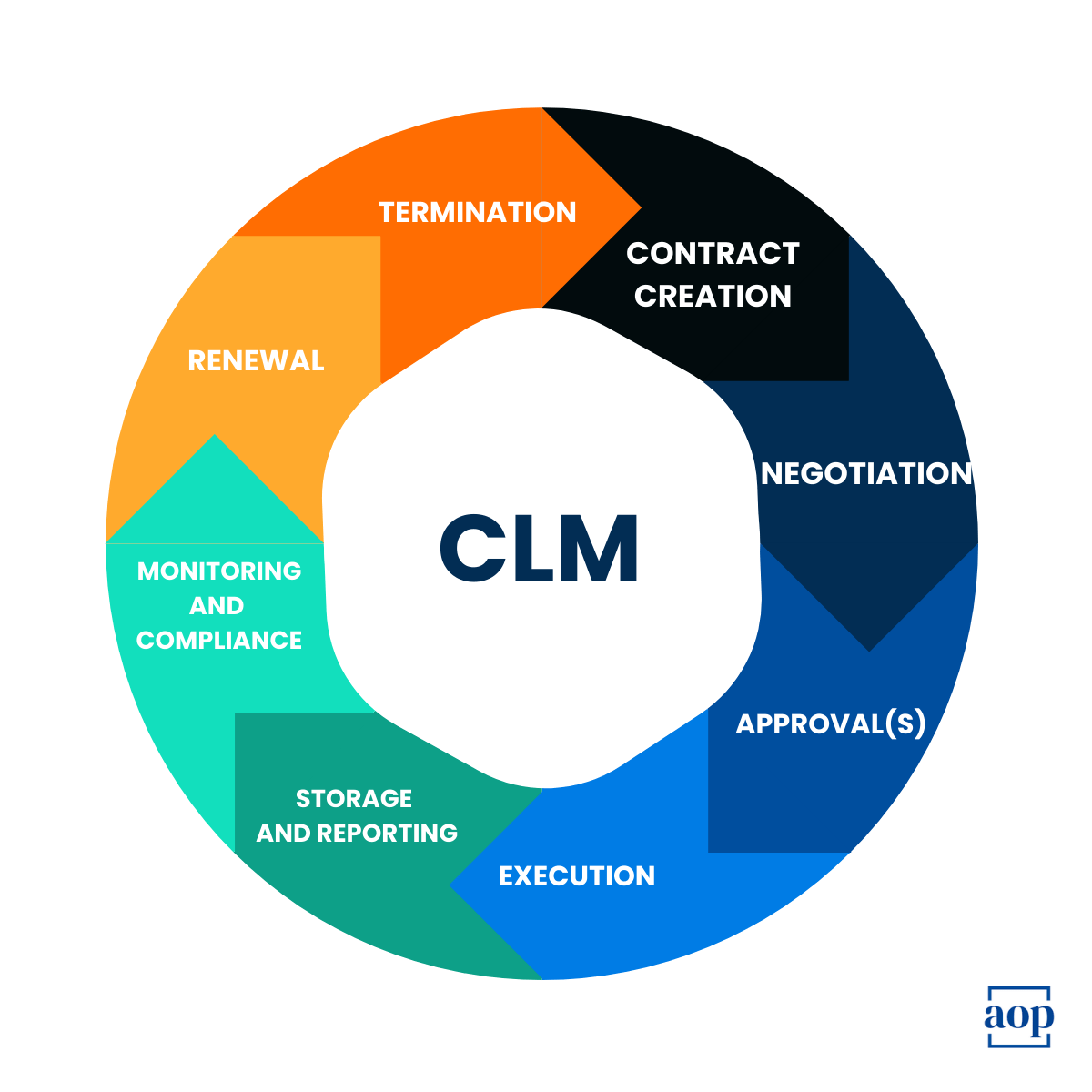
1. Contract creation
Every contract starts with an approved intake request or other way to create a contract. Clear CLM templates and clause libraries reduce drafting time and errors in contract generation. Instead of reinventing terms, you set a strong foundation with standard language that reflects both legal requirements and procurement goals.
2. Negotiation
Contract negotiations balance cost, risk, and relationships. CLM software can facilitate the negotiation process by making it easier to review and manage versions of contracts. This keeps collaboration transparent and reduces confusion when teams look back at how agreements evolved.
3. Approval(s)
Structured approval workflows provide governance. In most CLM processes there are pre-planned and automated approval steps spanning different stakeholders or departments. Instead of chasing signatures through endless email chains, automated workflows can route contracts to the right people based on risk, value, or category.
4. Execution
Once approvals are in place, the contract can be signed. E-signature capabilities in CLM solutions make this step fast, secure, and auditable. The contract then moves into a central repository instead of disappearing into someone’s inbox.
5. Storage and reporting
A centralized contract repository is the heart of modern CLM. You and your team can search, retrieve, and report on contracts without digging through folders. Reporting dashboards and contract analytics can reveal how many contracts are active, what terms apply, and where obligations sit.
6. Monitoring and compliance
Contract signature is just the start of effective contract management. Performance monitoring ensures suppliers deliver as promised and comply with regulations. CLM systems can track milestones, alert you to risks, and flag upcoming deadlines before they become problems.
7. Renewal
Contract renewals should never catch you by surprise. CLM software can tie renewal decisions to supplier performance data or market benchmarks. That way, you don’t default into rollovers. You make informed choices on whether to extend, renegotiate, or exit.
8. Termination
Sometimes the right outcome is to exit an agreement. A structured termination process prevents auto-renewals, ensures obligations are closed, and captures lessons for the next cycle.
Why CLM matters today
Here are a few quick highlights of why CLM matters in today’s business environment:
- Unclear ownership: In 40 percent of organizations, it is unclear who has responsibility for contracts, according to research by Icertis and World Commerce & Contracting.
- Fragmented tools: According to DocuSign, 65 percent of teams aren't using integrated tools to manage agreements, leading to 68 percent of contract professionals searching for completed contracts at least once a week
- Value erosion: Deloitte estimates 1-8 percent value erosion from poorly managed contracts, where the anticipated benefit from an agreement gradually erodes over time
Efficient contract lifecycle management creates structure and streamlines end-to-end contract processes by consolidating agreements in a single location, automating routine tasks, and delivering transparent insights into where each contract stands in its lifecycle.
Types of CLM tools
The CLM technology landscape offers two main categories of solutions: comprehensive suites and specialized point solutions.
CLM suite platforms
Contract lifecycle management is a major software category, with a market size above $1.6 billion in 2024. Typically, this category includes major suite platforms that cover a wide range of contract management needs, often connected to broader sourcing or procurement processes.
These comprehensive platforms can handle the entire contract lifecycle from creation to renewal. Major players have integrated workflows for contract creation, negotiation, approval, execution, and management. Learn more about CLM platforms in our technology insights hub.
Specialized point solutions
Point solutions focus on specific stages or functions within the contract lifecycle, often providing deeper capabilities in their area of specialization.
- Contract intelligence and analysis: A number of new solutions offer AI-assisted contract analysis capabilities, including the ability to scan individual contracts for compliance issues, or the ability to match agreement or discount terms to spend by supplier.
- Contract creation and drafting: A variety of solutions offer the ability to generate compliant terms from approved templates or clause libraries.
- Contract review and negotiation: Software can be used to automatically review and redline contracts or contract metadata. These solutions may also offer functionality for collaborative reviews and version controls for negotiated contracts.
- Post-signature management: Other solutions, such as spend analysis tools, may offer the ability to monitor compliance to contract or performance against contract terms. These solutions may include alerts or recommendations for scheduling contract renewals.
The key thing to remember is that CLM extends far beyond a single piece of technology. Modern CLM tools combine people, processes, and technology to create visibility, accountability, and measurable outcomes from contract lifecycle management.
Key benefits of CLM technology
For enterprise organizations, the management of contracts across different functions or business units can easily get out of hand without standardized processes, collaboration, and visibility into performance. In these cases, the business case for CLM technology can come from a number of different directions.
1. Efficiency and speed
Templates and clause libraries cut drafting time. Automated workflows replace email chains. E-signatures reduce cycle time from weeks to hours. In large organizations, these efficiency gains can add up to thousands of hours saved annually.
2. Risk reduction
CLM systems provide built-in compliance checks. They track obligations, flag non-standard clauses, and keep audit trails. For industries under regulatory scrutiny—like healthcare, finance, and energy—this isn’t optional. It’s how you prove to auditors and regulators that controls are in place.
3. Collaboration and alignment
Procurement rarely owns contracts alone. Legal, finance, operations, and business sponsors all have a stake. CLM tools create shared workspaces where each group can contribute without version chaos. This reduces friction and ensures every stakeholder can sign off with confidence.
4. Better business outcomes
The real payoff comes after signature. Performance dashboards show whether suppliers meet service levels, deliver innovation, or hit sustainability targets. Renewal alerts prevent costly rollovers. Advanced analytics highlight opportunities for consolidation, better terms, or risk diversification. Contracts stop being paperwork and become a roadmap for supplier relationships.
What to look for in a CLM solution provider
Selecting a CLM solution is more than a feature checklist. You need to balance functionality with usability and adoption:
- Full lifecycle support: Does the tool cover creation, negotiation, approvals, execution, monitoring, renewals, and termination.
- Security and compliance: Encryption, access controls, audit trails, and certifications are non-negotiable.
- Integration: Contracts should not live in isolation. Make sure the CLM integrates with your ERP, CRM, e-signature, and spend analysis tools.
- Ease of use: Many stakeholders will only log in a few times per year. If the interface is complex, adoption will prove elusive. A system that feels intuitive the first time someone uses it will drive far higher compliance.
- Solution provider stability: Look for providers with a track record, industry references, and financial backing. CLM is a long-term commitment.
- Scalability: The tool should fit your budget today and grow with your organization tomorrow. A CLM solution should match your maturity level and growth plans.
- Change management: A common reason CLM projects fail is underestimating the effort required to bring key stakeholders on board. Plan training, onboarding, and internal communication as carefully as the technical implementation.
Bottom line on contract lifecycle management
Ineffective contract management costs enterprises trillions in lost value. The right CLM approach can help you close that gap.
The question isn't whether contract lifecycle management can support your organization. It's which approach fits your current needs and future ambitions. Your CLM game plan should evolve with your organization's maturity. Start by mapping out your ideal CLM processes, then look for quick wins that demonstrate value before scaling to more sophisticated capabilities as stakeholders see results.
Today's rich CLM technology landscape offers mature solutions, from comprehensive suites to specialized point solutions, each designed to address specific pain points in your contract processes.
To explore your options, visit the Art of Procurement Provider Directory.