
7 min read
.png)
Strategic sourcing means different things to different people.
I've hosted hundreds of Art of Procurement podcast episodes. In those conversations with enterprise leaders, strategic sourcing comes up regularly.
Strategic sourcing is a core skill for procurement professionals. It's so fundamental that we might not think enough about the process and its goals. Procurement could do more to explain the objectives and tactics to new professionals and the broader business.
Let me give you an easy-to-remember definition. Plus some useful tips and links for more reading.

What is strategic sourcing?
Strategic sourcing is a systematic approach to procurement. It involves analyzing spend, understanding market dynamics, and building strong supplier relationships. The goal is to help the team make informed decisions that align with your company's overall objectives.
When applied correctly, strategic sourcing helps procurement move beyond transactional purchasing by adopting a proactive, value-driven approach.
Origins in Kearney’s 7 step strategic sourcing process
While the origins of the term “strategic sourcing” are unclear, many people attribute it to Kearney’s 7 step strategic sourcing process. Since the early 1990s, management consultancies, academics, and procurement professionals have used the term to describe a strategic alternative to operational purchasing.
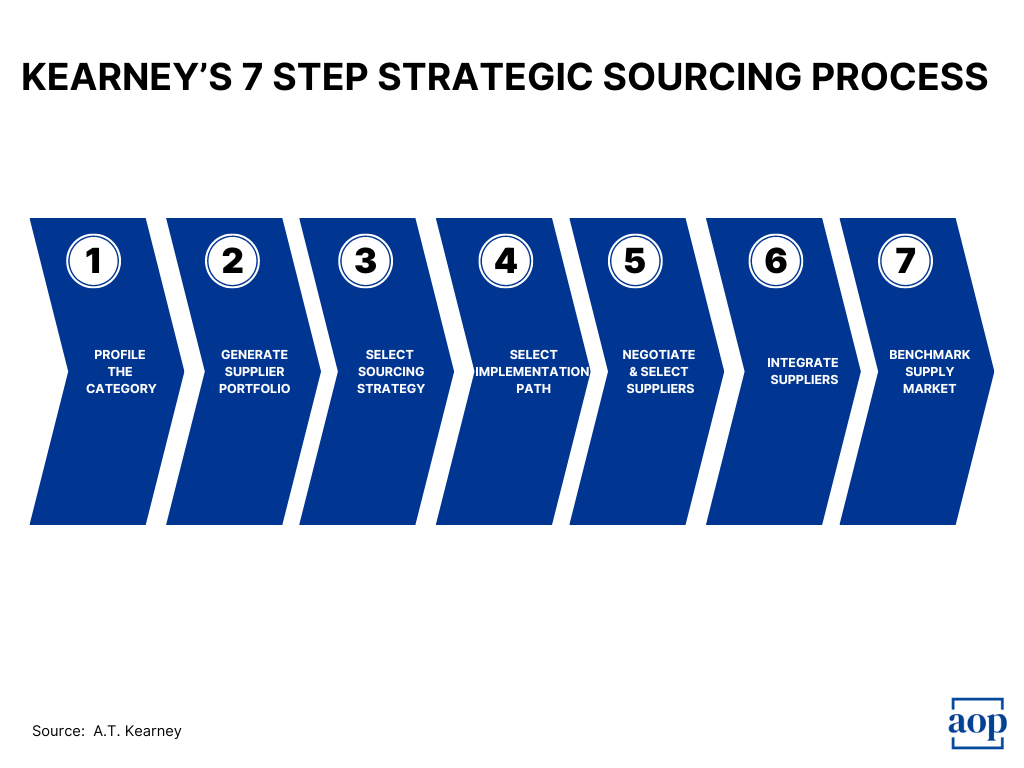 This is still a good theoretical starting point – yet, the role of strategic sourcing in procurement has become even broader over the years. Let’s go through a couple key points to remember.
How does strategic sourcing differ from traditional purchasing?
While traditional procurement objectives are focused on short-term cost savings, strategic sourcing helps decision making teams take a broader view. Strategic sourcing encourages them to consider factors like total cost of ownership, quality, sustainability, and risk management.
According to Tom Beaty from Insight Sourcing Group, “Strategic sourcing blends science, art and heavy data analytics with the use of a comprehensive methodology designed to explore all viable avenues in pursuit of total cost reduction and overall quality/service parity or improvement.”
Strategic sourcing vs category management
Strategic sourcing and category management are closely related. But there's a key difference between them.
Strategic sourcing focuses on the end-to-end process for managing one specific purchase. The team identifies, evaluates, and selects suppliers to meet the organization's needs. The goal is to achieve the best total value.
Category management takes a broader approach. It involves managing spend categories more comprehensively, sometimes multiple at a time. This approach considers market dynamics, demand management, stakeholder needs, and long-term business objectives. The result is a category-specific strategy that can be applied in more than one strategic sourcing project.
Four pillars of strategic sourcing
When you look into the details, strategic sourcing can be seen as consisting of four core pillars: spend analysis, sourcing, contract management, and supplier relationship management.
1. Spend Analysis
Spend analysis involves collecting, cleansing, categorizing, and analyzing your organization's purchasing data. This gives you a clear understanding of past spending patterns, supplier performance, and cost-saving opportunities.
Spend analytics often uses software or data analytics methods. These transform raw data into actionable insights. For example, spend analytics might reveal that your company buys similar products from multiple suppliers at different prices - or even from one supplier at different prices! This indicates an opportunity for consolidation and renegotiation.
2. Sourcing
Sourcing is the process of identifying, evaluating, and selecting qualified suppliers. These suppliers must meet your organization's needs for cost, quality, delivery, and innovation.
This involves developing a sourcing strategy, conducting market research, engaging with potential suppliers, and selecting the most suitable partners.
For instance, when sourcing a critical raw material, procurement professionals may issue an RFP, evaluate supplier responses based on set criteria, conduct negotiations, and offer recommendations to the business as they select the supplier offering that provides the best overall value.
Effective sourcing balances cost optimization with other factors. These include supplier reliability, quality, and alignment with organizational goals.
3. Contract management
Contract management oversees and administers agreements with suppliers. This ensures compliance, mitigates risks, and maximizes value.
Activities include negotiating contract terms, monitoring supplier performance, and managing renewals and amendments. Procurement may also resolve disputes or issues that arise.
For example, a procurement professional may work with their legal team to develop robust contracts. These clearly define performance expectations, payment terms, and compliance requirements. When a specific agreement justifies it, these standard terms may be modified to meet the requirements in that case.
Throughout the contract lifecycle, they:
- Monitor supplier performance against KPIs
- Conduct regular reviews
- Take corrective actions when needed
4. Supplier relationship management
Supplier relationship management (SRM) involves strategically collaborating with key suppliers. The goal is to drive mutual benefits, continuous improvement, and innovation.
This builds trust, fosters open communication, and aligns goals and objectives. For instance, a procurement professional may work closely with a strategic supplier. Together, they identify opportunities for cost reduction, process optimization, or new product development. They can also decide how to distribute the benefits of this collaboration fairly.
Regular supplier performance reviews help, and so does sharing insights and best practices. Jointly addressing challenges builds long-term, mutually beneficial relationships that drive value beyond cost savings.
How you use these pillars depends largely on your business size and scope. Procter & Gamble offers a good reference example.
Example of strategic sourcing principles
A good strategy is one that has a long-term perspective and is well communicated to both internal and external stakeholders.
Procter & Gamble (P&G) has established five core principles that guide their strategic sourcing efforts globally. These principles aim to ensure P&G consistently secures the best value while maintaining ethical and collaborative relationships with their suppliers wherever they are in the world.
P&G’s five strategic sourcing principles:
- Best Total Value: P&G’s sourcing decisions prioritize the best total value, encompassing factors beyond just the initial purchase price. They consider the total cost of ownership, including quality, supplier responsiveness, speed to market, sustainability, and the supplier’s willingness to share risk and resources.
- Honest, Ethical, and Fair Dealings: P&G is committed to treating all suppliers with respect, honesty, and fairness. They conduct business ethically and in compliance with all applicable laws and regulations, fostering trust and transparency in all their supplier relationships.
- Externally-Linked Supply Solutions: P&G leverages their extensive market knowledge and global supplier network to identify innovative and effective solutions for their business needs. They actively seek out supplier competencies and resources to develop commercially viable supply solutions that drive growth and profitability.
- Competition and Collaboration: P&G strategically utilizes both competition and collaboration in managing supplier relationships. They believe competition fosters innovation and efficiency, while collaboration allows them to tap into supplier expertise and resources for mutual benefit. The approach is tailored to each situation based on market dynamics, supplier capabilities, and the desired level of interdependence.
- Supplier Incumbency: P&G values stability in their supply base and prioritizes maintaining relationships with incumbent suppliers who consistently deliver value. New suppliers must demonstrate significantly better total value to displace an incumbent, ensuring continuity and fostering long-term partnerships.
In this example from Procter and Gamble, strategic sourcing can be seen as a set of guiding principles. Many other global businesses document their strategic sourcing principles to align both internal and external stakeholders to their way of doing business.
Key benefits of strategic sourcing
Strategic sourcing offers numerous benefits to organizations that implement it effectively. Here are some of the key advantages:
- Cost savings: By analyzing spending patterns, consolidating suppliers, and leveraging negotiations, strategic sourcing can significantly reduce costs and improve the bottom line.
- Improved quality: Strategic sourcing focuses on selecting suppliers that offer the best overall value, which includes quality considerations. This approach ensures that organizations receive high-quality goods and services.
- Risk mitigation: Through thorough supplier evaluation and risk assessment, strategic sourcing helps identify and mitigate potential risks in the supply chain, such as supplier financial instability or supply disruptions.
- Enhanced supplier relationships: Strategic sourcing emphasizes building long-term, collaborative relationships with key suppliers. This approach fosters trust, open communication, and joint problem-solving, leading to better outcomes for both parties.
- Innovation and continuous improvement: By partnering with strategic suppliers, organizations can tap into their expertise and knowledge to drive innovation, optimize processes, and continuously improve products or services.
- Increased efficiency: Streamlined procurement processes, automation, and standardization through strategic sourcing can significantly improve operational efficiency and reduce lead times.
- Better alignment with business objectives: Strategic sourcing ensures that procurement activities align with the organization’s overall goals and objectives, contributing to long-term success and competitiveness.
- Enhanced visibility and control: Robust data analysis and reporting capabilities within strategic sourcing provide greater visibility into spending patterns, supplier performance, and compliance, enabling better decision-making and control over procurement activities.
By leveraging these benefits, organizations can transform their procurement function into a strategic enabler of business success, driving cost savings, improving quality, mitigating risks, and fostering innovation.
Bottom line on strategic sourcing
Strategic sourcing is a proactive and analytical approach to spend management that focuses on achieving the best total value for an organization. It often involves investments into core pillar areas of spend analysis, sourcing, contract management, and supplier relationship management.
While it is closely related to category management, strategic sourcing is usually more operational than strategic. When implemented effectively, strategic sourcing delivers significant benefits, including cost savings, enhanced quality, risk mitigation, stronger supplier relationships, and alignment with overall business objectives.