

2 min read
The Agentic Procurement Diaries: Teach the Agent Before You Trust It: Messer Americas' Guided Buying Story
Philip Ideson : October 28, 2026
Dear Diary…
I think my advice would be: start sooner rather than later.
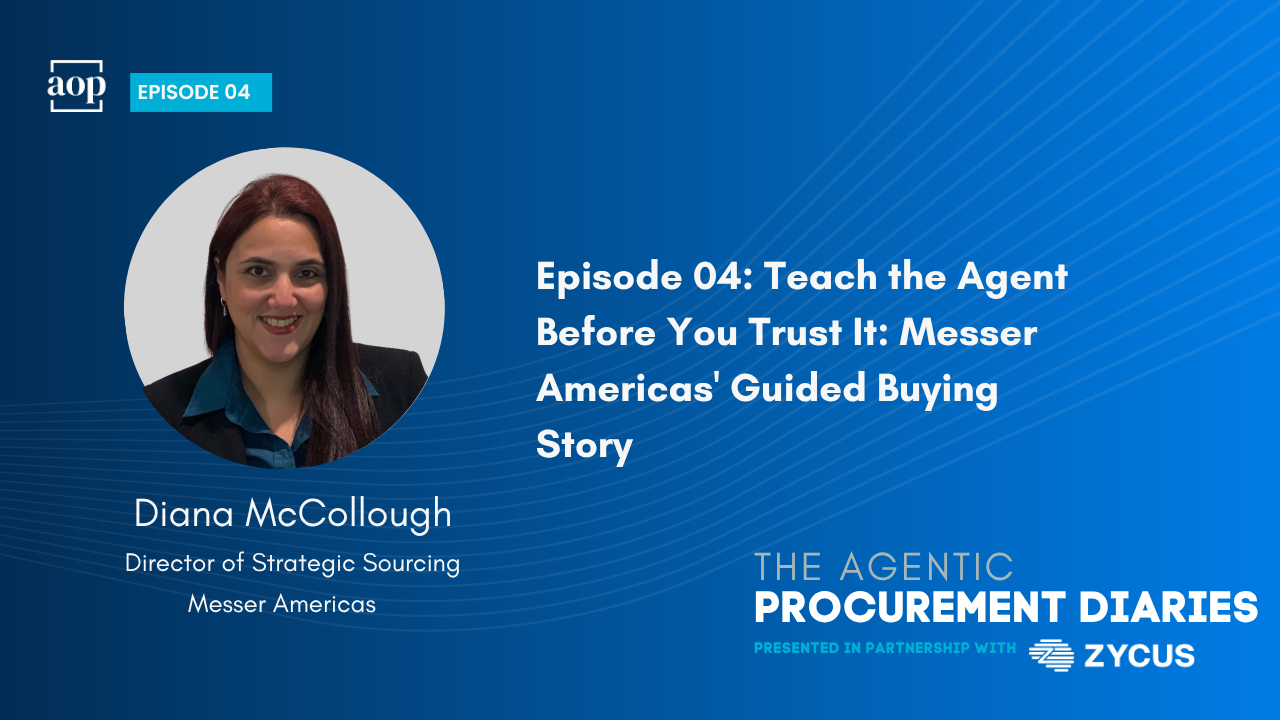
That's how Diana McCollough wrapped up our conversation, and it captures the way she and her team approach agentic AI. Diana is Director of Strategic Sourcing at Messer Americas, the world's largest privately held industrial gas company. Messer Americas splits procurement into three areas: strategic sourcing, operational procurement, and procurement excellence. Diana leads strategic sourcing, where her category managers and lead buyers manage the company's strategic spend. She describes a lean, hands-on culture that likes ideas but likes them much better once they become solutions.
THE INHERITANCE
When Diana's team looked for a starting point, two problems stood out. There was a lot of maverick spend across the company, and processes weren't documented as well as the team had assumed.
Much of the knowledge sat with her people. How you handle case A, case B, and case C lived in their heads, not on paper. That meant users kept coming back to procurement with the same questions about policies, requirements, and where to buy things.
Messer's journey started about two years ago. Diana told me the market was full of noise and shiny tools, so the team explored and ran small pilots at the same time to see what fit Messer.
THE BET
The big decision was timing. Diana's team chose to start exploring as soon as possible rather than waiting for the noise to settle or for every unknown to be answered.
They had strong backing from leadership and from their CIO, and they brought IT in from the start. That meant guardrails, data privacy, and governance were part of the conversation from day one.
The moment that sealed it for Diana was a demo from the provider they ended up partnering with. A user simply said what they wanted to buy, and that one conversational request triggered the full procurement process from beginning to end, with policies guiding the buying channel along the way. She said she was blown away, and it shifted her view from AI helping individuals work faster to AI changing the whole process.
At the beginning of this year, Messer went live with its first agents, focused on guided buying and buying channels. Wave 2 is close behind, covering requisition reviews, converting requisitions into purchase orders, and PO confirmation.
THE AGENTIC QUESTION
I asked Diana whether she'd let an agent act without a human in the loop. Her answer was that it isn't a yes or no question.
She weighs two things. First, how much information and training the agent has received, and how thoroughly the team has tested its behavior. Second is the risk associated with the task.
The buying channel agent passes both tests. It's internal, the team invested heavily in the information behind it and in maintaining that information, and they've tested it. So they're comfortable running it with no human in the loop.
Where there's commercial exposure, supplier relationship impact, or regulatory risk, Diana would likely keep a human involved. Her goal isn't full autonomy everywhere. It's the right level of autonomy for each agent. She was candid that testing never really ends: sometimes the agent gives an answer that makes you ask, are you sure?
THE RECEIPT
What worked: the guided buying agent sends users straight to where they should go, cuts the flood of repeat questions, and builds compliance into buying. More digitalization is also giving the team better visibility into what's being bought, which feeds savings work and shows where people need more education.
Adoption taught its own lesson. Curiosity got people to try the agent at first. Peer validation is what drove sustained use. Emails and announcements didn't move people; real cases that touched their daily work did.
What didn't: nothing that they saw exceeded their expectations, partly because suppliers oversell. Diana had more examples of hype not matching reality. Her answer was to run short pilots with specific measures of success, and a willingness to walk away and not scale when something doesn't fit.
The biggest surprise was the documentation. Years of company knowledge had to be taught to the agent, because it's not a generic process. It's how Messer does it.
Links:
- Diana McCollough on LinkedIn
- Zycus on LinkedIn
- AOP Provider Directory | Zycus
- Subscribe to the AOP Newsletter