3 min read
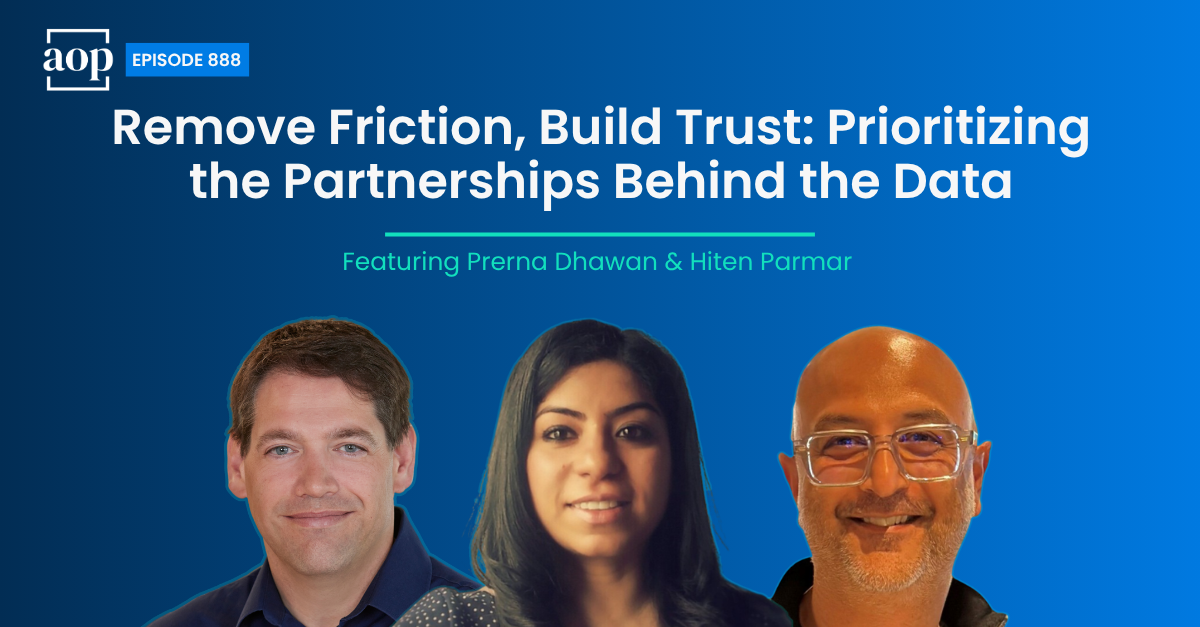
Remove Friction, Build Trust: Prioritizing the Partnerships Behind the Data
Philip Ideson : October 18, 2026
“If you're looking for perfection, that's going to be where you find failure.” -Hiten Parmar, Chief Procurement Officer, Beazley
Every CPO I talk to is being asked to do more with less, and AI has only raised the bar. Boards want procurement to solve real business problems at pace. Very few teams can build every capability they need on their own.
I spoke with Hiten Parmar, Chief Procurement Officer at Beazley, and Prerna Dhawan, Chief Product Officer at Beroe, about how their partnership removes friction from the procurement process and builds trust with stakeholders. They were candid about what makes a supplier relationship strategic and about what quietly breaks one.
Ask Who's Best in the World
"Nine times out of ten, it's probably a no answer. So then who's best in the world to do it?" - Hiten Parmar
Hiten uses a simple filter. Before building anything in-house, he asks whether the capability is core to how Beazley makes money. If the answer is no, he looks outward.
AI was his example. An insurer doesn't need to turn itself into an AI company when others already do that well. Going external is a sign of strength, not weakness. The skill is in finding the right partners and accessing them again and again.
Your Board Has Already Moved On
"You don't have a choice, candidly, because your board has already moved on. They're already thinking and asking different questions." - Hiten Parmar
A legacy approach will keep missing the target, and the business will start looking elsewhere for answers.
He sees the procurement leader as the custodian of an ecosystem that can help the company grow. Five years ago, removing friction meant incremental process fixes. Today he treats it as an operating model decision, built on talent and collaboration with the right partners.
Trust Breaks at the First Upsell
"Ideally, I could have just said, no, you have to unlock more suppliers, increase the consumption, pay me more. But that's the first point at which the trust breaks, because then next time you're not going to trust me to be open and build something together." – Prerna Dhawan
Prerna shared a real example. Beroe's data licensing meant Beazley would normally pay more to unlock additional suppliers. Through joint discovery, the two teams built a feature that lets users follow a supplier instead. The need was met without a new charge.
Prerna plays the long game. Beazley started with market intelligence and later extended into risk. If you want to know whether a supplier is a real partner, watch what they do when they could charge you more and choose not to.
Provenance Is the New Scarcity
"In today's day and age, what has AI made scarce? It's provenance." – Prerna Dhawan
Twenty years ago, procurement's problem was too little data. Now it's too much. Hiten put it plainly: he is flooded with data and needs "decision-grade data" he can trust.
The two of them have a clear split of responsibilities. Beroe brings the outside-in data, the interdependencies between datasets, and proof of where that data came from. Beazley brings the context, such as which suppliers are most critical.
Transactions Will Belong to Agents
"If you want to just transact, then an agent's going to do that in tomorrow's digital workforce." – Hiten Parmar
When I asked how he brings his team along, Hiten described three habits. Speak in your stakeholders' terms, not procurement terms. Bring suppliers and their perspective into the business, acting as a facilitator between them and your stakeholders.
He also explicitly challenges and rewards this behavior, treating it as part of the day job. His message to the team is simple: whatever size of step you take, make sure it goes forward.
Flip the Supplier Risk Question
"Is it truly a partnership? Is it truly a relationship, or is it just supplier management?" – Prerna Dhawan
Procurement teams spend plenty of time assessing supplier risk. Prerna wants them to ask the reverse: where do you sit on your supplier's priority list? She told me she has never been asked that question.
Hiten wants Beazley to be a client of choice, and he believes people can spot inauthenticity a mile off. I've seen supplier relationship management programs that were really negotiation tools in disguise. Suppliers can tell when the words don't match the actions.
Links:
- Hiten Parmar on LinkedIn
- Prerna Dhawan on LinkedIn
- Join AOP and Beroe at ProcureTEX in Amsterdam, November 3rd
- Subscribe to the AOP Newsletter