
“We compete with people's homes more than we do with other coworking locations because my job is to get people to want to come into my spaces, and that is what I focus on every single day.” -Sarah Travers, CEO, Workbar
The future of work is evolving faster than most organizations can comfortably process. Hybrid policies are shifting, long-term leases are coming up for renewal, and procurement leaders are increasingly finding real estate decisions landing squarely in their remit.
If procurement approaches workspace purely as a cost line item, we risk missing the bigger strategic conversation about productivity, talent, and flexibility.
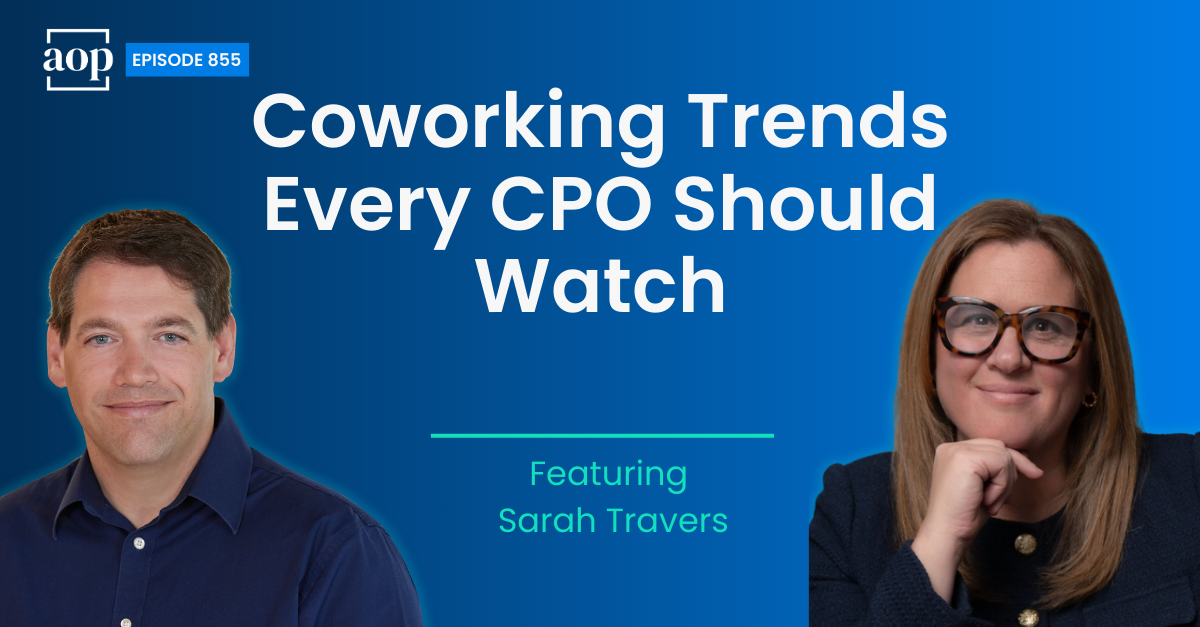
That is why I invited Sarah Travers, CEO of Workbar, onto the Art of Procurement podcast. Sarah has spent more than two decades in the coworking industry, watching it evolve from a niche concept into a meaningful lever for enterprise real estate strategy.
In this episode, our conversation goes well beyond desks and square footage. We explore how coworking fits into hybrid models, how procurement should evaluate providers, and why the employee experience now sits at the center of workplace decisions.
Here, in Sarah’s own words, are some of the moments that stood out.
Flexibility Without the Lease Liability
“CFOs and heads of procurement and real estate usually like [coworking spaces] because it's not a lease liability. They're not locking into like a five-year lease. They're not getting furniture. They're not getting a staff.”
From a procurement standpoint, this is where the conversation gets very practical. Long-term lease commitments are a classic example of fixed cost exposure that can outlive the assumptions behind them. Business cycles change. Headcount shifts. Strategy pivots. The lease remains.
Sarah’s point about avoiding lease liability resonates because it introduces optionality back into the equation. Pass-based models, month-to-month arrangements, and on-demand access allow organizations to align real estate spend more closely with actual usage. That flexibility is not simply financial. It is strategic. It allows leaders to test, iterate, and adjust instead of making one large bet that has to be defended for years.
For those of us who have spent time unwinding underutilized contracts, the appeal of that flexibility is clear.
Hybrid Means Structured Choice
“A huge draw for Workbar is the hybrid teams, where a CEO says, ‘I want to have my team in our Boston HQ Tuesday, Wednesday, Thursday… The other days I want to offer them the benefit of working from home, but not working from home, right?’ This is a great alternative for that.”
What I appreciate about this insight is the nuance. Hybrid work does not have to mean binary choices between headquarters and home. There is a third path that offers structure without rigidity.
In many organizations, we see friction when employees are asked to commute only to sit in private offices on video calls all day. That experience does little to justify the time investment. A well-designed coworking model can provide variety, community, and professional infrastructure without requiring a five-day presence in a central location.
For procurement leaders, this becomes a question of value delivery. Are we enabling a workplace ecosystem that supports how people actually work, or are we simply preserving legacy structures? The right answer will vary by organization, but the strategic lens should stay front and center.
Right-Sizing Instead of Downsizing
“I always recommend companies start off with passes [to coworking spaces] because they're usually month to month… It can change, which is why we like to think of it as right-sizing.”
The language here matters. Right-sizing suggests alignment, not reduction. It reflects a more dynamic approach to capacity planning.
In my conversations with CPOs, I often hear concern about making irreversible decisions in uncertain environments. Starting with passes or pilot programs creates a lower barrier to entry. It allows procurement to gather real usage data, assess employee adoption, and refine the model before expanding commitment.
This approach mirrors best practice in other categories. We pilot technology platforms. We trial new service models. We phase in transformation initiatives. Real estate should not be exempt from that discipline. Structured experimentation can surface insights that a spreadsheet model alone will not reveal.
Energy Is a Leading Indicator When Choosing a Coworking Space
“Not all coworking spaces are created equal, and if you walk in and there’s no energy right when you walk in, that’s not a great place to send your employees.”
As procurement leaders, we are trained to evaluate categories through the lens of cost, risk, and service levels. Those are critical. But in categories like workspace, there is another dimension that is harder to quantify and just as important: energy.
If a space feels flat, transactional, or disengaged, your people will feel it immediately. And if they do not want to be there, you will not achieve the collaboration, creativity, or culture you are trying to enable.
When evaluating coworking providers, Sarah is spot on that it’s worth spending time on site, observing how people interact, and asking whether you would genuinely choose to work there yourself. The atmosphere is not a soft factor. It is a leading indicator of adoption and return on investment.
Local Operators and the Enterprise Dilemma
“I really encourage teams to look at local operators within the areas… They are not a one-size-fits-all. The number one question you want to think about is, honestly, IT-related. Like, where is the IT help desk, and what does the onboarding look like for that person?”
This is where procurement complexity comes into play. Many organizations have global agreements with large providers for simplicity and scale. That can make sense from a risk and governance perspective. At the same time, local operators may offer a more tailored experience, stronger community management, and closer on-the-ground support.
Sarah’s emphasis on IT support and onboarding is a critical reminder. Workspace is not just about desks. It is about connectivity, security, and employee experience. If a remote team member struggles with VPN access or does not receive adequate onboarding, the perceived flexibility quickly becomes frustration.
For seasoned procurement leaders, this reinforces the importance of cross-functional alignment. Real estate decisions intersect with IT, HR, finance, and employee experience. The evaluation criteria must reflect that complexity. Price per square foot is rarely the decisive metric in isolation.
As hybrid work continues to evolve, I believe procurement has an opportunity to lead rather than react. By viewing workspace as a flexible service portfolio rather than a static asset, we can align cost, culture, and performance more effectively. Conversations like this one with Sarah help us move that thinking forward in a disciplined and practical way.
Links: