“If you focus on stakeholders’ needs and add value, the savings will always follow.” - Brad DeHart, Senior Vice President, Customer Growth, Continuum
Marketing procurement has always operated differently from many other areas of spend. The relationships are more personal, the pace is faster, and the connection to revenue generation is often much more direct. What makes the challenge even harder today is that procurement teams are expected to create strategic value while operating with fewer resources.
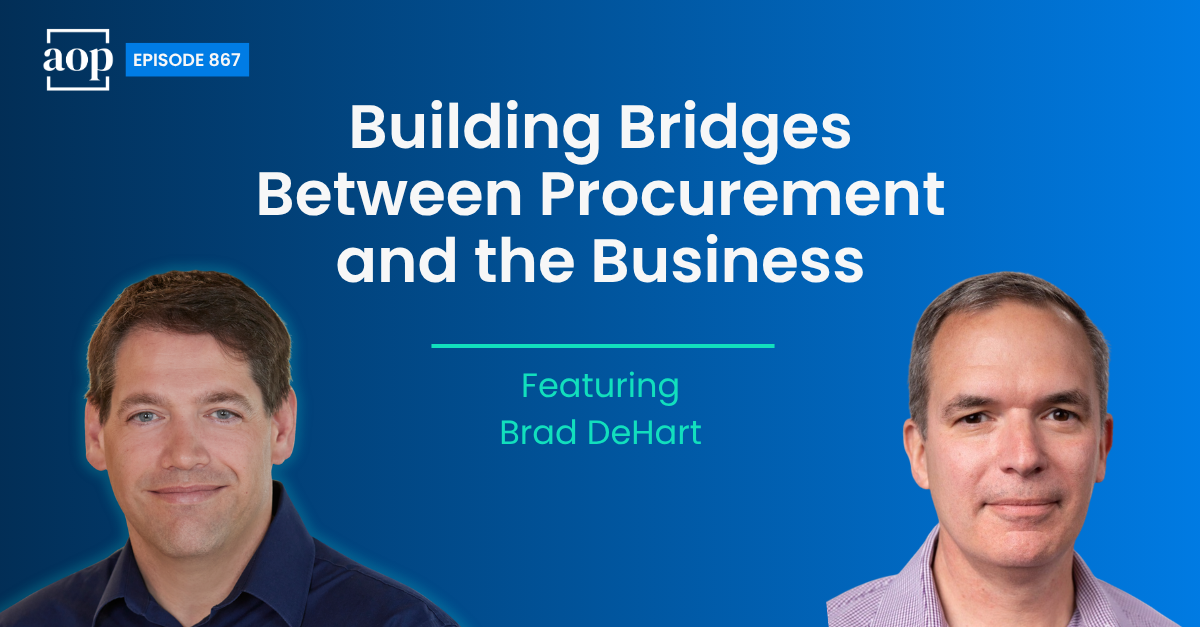
In this episode, I speak with Brad DeHart, someone I have known for many years and who is a longtime leader in marketing procurement. Brad has worked on both the procurement and commercial sides of the table, which gives him a balanced perspective on how procurement can build influence with marketing teams (and, across other business functions, for that matter) rather than becoming viewed as a barrier.
Procurement’s success in marketing depends on trust, engagement, and relevance to the business. Those things are not built through sourcing events alone. They are earned over time through consistency and a willingness to meet stakeholders where they are.
Here, in Brad’s own words, are some of the stand-out moments from our conversation.
Why Savings-Led Conversations Fall Flat
“If you mention savings more than once in a meeting with marketing, they'll just tune you out.”
This quote immediately resonated with me because I have seen this dynamic play out countless times. Procurement often enters stakeholder conversations focused on cost reduction because that is the language procurement organizations are conditioned to prioritize. The problem is that marketing leaders are usually focused on growth, brand impact, customer engagement, and speed to market. If procurement shows up talking only about savings, it creates a disconnect from what the stakeholder actually values.
That does not mean savings are unimportant; they absolutely matter. In marketing procurement, however, the strongest relationships are built when procurement demonstrates an understanding of the business objectives behind the spend. When that happens, savings become a byproduct of stronger collaboration rather than the sole reason for engagement.
The Trusted Advisor Relationship Takes Time
“If marketing procurement leaders can get to the point with marketing leadership of that trusted advisor role where you're on the inside and helping them with their external relationships and thinking about things that are causing them problems or that they want to solve and move into next, that's the optimum relationship.”
Trusted advisor status is not achieved through a single sourcing event or negotiation. It comes from sustained engagement and a genuine understanding of the stakeholder’s world. The best procurement leaders I have worked with know how to bring ideas, market insight, supplier perspectives, and strategic thinking into the conversation long before a formal procurement process begins. That is what changes procurement from being viewed as a checkpoint into being viewed as a partner. It also creates significantly more influence over outcomes because procurement can get involved earlier, when decisions are still taking shape.
Why Strategic Categories Matter Most
“I think the best strategy is to go after the most strategic areas of spend. You sort of are what you manage and that's how you're defined.”
This is a particularly important point because procurement teams often default toward the categories perceived as easier or less politically sensitive. In marketing, that frequently means starting with print, promotional items, or other highly tactical spend areas. Brad challenges that thinking directly. If procurement only participates in tactical categories, stakeholders naturally assume procurement’s role is tactical. When procurement engages effectively in agency management, strategic marketing partnerships, or broader commercial discussions, the perception changes. Procurement can associate themselves with business impact rather than transactional support.
“The user experience of working with procurement can really drive your success or not.”
Procurement organizations often spend significant time optimizing their own processes, controls, and systems without fully considering what the experience feels like for stakeholders. Marketing teams, in particular, tend to have very little patience for processes that create friction without clear value.
Procurement’s reputation is often formed around the easiest purchases, not the most strategic sourcing projects. If buying something simple becomes unnecessarily difficult, that frustration colors how stakeholders perceive procurement as a whole. Brad’s point reinforces the idea that procurement operating models need to be designed with the stakeholder experience in mind, not just procurement efficiency.